
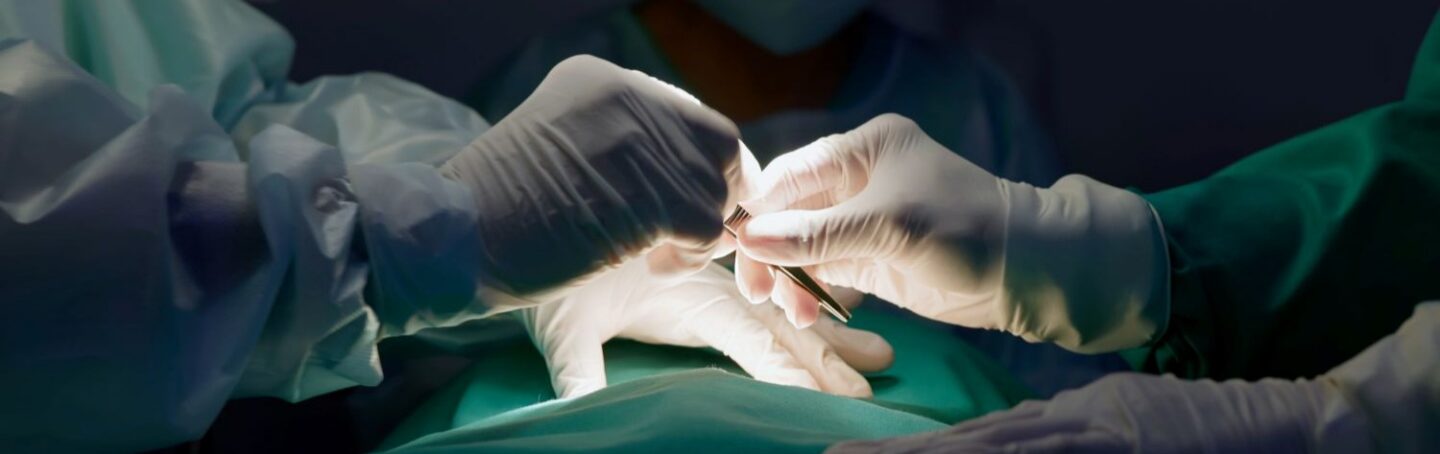
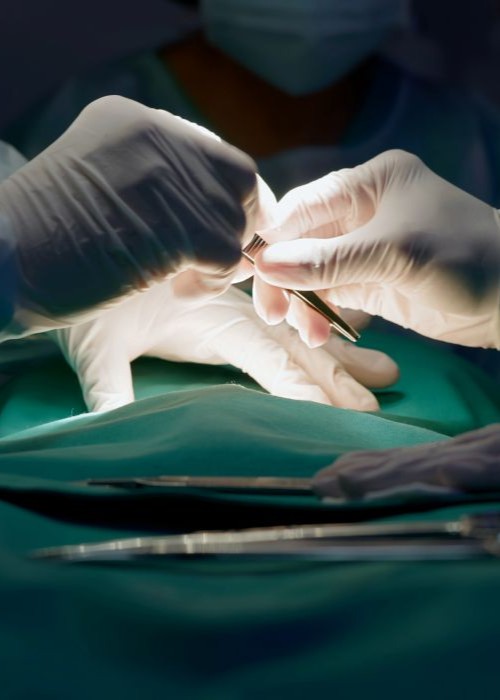

In 2004, a man named Cheng Pei Ming woke up in a hospital bed under armed guard with a long incision running across his chest and under his arm. He says he never consented to surgery. Doctors refused to explain what had happened to him. Later, he’d learn that part of his lung and liver were gone.
For many years, suspicion surrounding China’s organ transplant system simmered mostly under the surface in whispered accounts from former Uyghur and Falun Gong detainees, unexplained medical testing and procedures inside internment camps, and statistical anomalies in the transplant data. Much of it was difficult to verify, easily dismissed, and of course, fiercely denied by the Chinese Communist Party.
Then, Cheng spoke publicly.
A practitioner of Falun Gong, the spiritual movement outlawed by Beijing in 1999, Cheng had spent years in detention after the nationwide crackdown began. During his imprisonment, he recalls being subjected to repeated blood draws, imaging scans, and physical examinations that appeared to have nothing to do with his health or well-being. According to his account, guards eventually transferred him under escort to a medical facility, where he says he was restrained and anesthetized against his will.
When he regained consciousness days later, he believed he had survived an attempted organ extraction.
Human rights researchers and advocacy groups, including the Falun Dafa Information Center, later cited Cheng’s account as one of the first major survivor testimonies connected to allegations of forced organ harvesting in China.
In 2021, marking the centenary of the Chinese Communist Party, China’s State Council Information Office released a white paper titled “The Communist Party of China and Human Rights Protection – A 100-Year Quest.” In it, the CCP claimed it has “always put people first” and advanced human rights in accordance with China’s national conditions.
“China maintains that all ethnic groups are equal,” the document said. “The Party makes every effort to achieve comprehensive progress in human rights and ensure the well-rounded development of all the people.”
Jan Jekielek, senior editor at the Epoch Times, disagrees.
In his book Killed to Order, Jekielek assembles 20 years of investigative reporting and testimony alleging unauthorized organ extractions and systemic abuse inside China’s transplant system, carried out against detained prisoners of conscience.
At the center of many of these allegations are practitioners of Falun Gong, a spiritual movement that expanded rapidly throughout China during the 1990s before being outlawed by the Chinese government in 1999.
In the years that followed, researchers, journalists, and human rights advocates documented a broad campaign targeting adherents, including detention without trial, political indoctrination, forced labor, and coercive efforts to pressure individuals to abandon their beliefs. Former detainees have also reported undergoing unexplained medical examinations while in custody.
Jekielek also traces allegations involving Uyghurs, Tibetans, and house church Christians, where reporting has documented overlapping patterns of incarceration, surveillance, and forced assimilation. In Xinjiang, extensive reporting has described large-scale detention facilities, pervasive monitoring of movement and communication, and political “re-education” programs aimed at reshaping religious and cultural identity.
Throughout his research, Jekielek said a pattern has emerged: a system of detention, medical testing, and organ harvesting, each a step in a long administrative chain.
On the heels of Cheng Pei Ming’s testimony, another whistleblower came forward: former President of the Israeli Transplant Association, Dr. Jacob Lavee.
In 2005, a patient of Professor Lavee’s told him that a major Israeli health insurance company had scheduled a heart transplant for him in China for a specific date. Lavee realized this meant the donor’s death was being “scheduled,” which catalyzed his investigation into forced harvesting from prisoners of conscience.
These bombshells catalyzed the first major investigation into China’s transplant system in 2006, led by David Kilgour and David Matas, who set out to answer a basic question: where were all the organs coming from?
Their report, called “Bloody Harvest,” analyzed transplant volumes, hospital capacity, and waiting times across China’s medical system, and concluded that roughly 41,500 transplants between 2000 and 2005 could not be explained by known donation sources. In a country without a functioning voluntary donation system at the time, they assessed that unwilling Falun Gong practitioners were likely a primary source of organs in a significant number of cases.
Their conclusion was damning: Since 1999, “the government of China and its agencies in numerous parts of the country, in particular hospitals but also detention centres and ‘people’s courts’,” they wrote, “have put to death a large but unknown number of Falun Gong prisoners of conscience. Their vital organs, including kidneys, livers, corneas and hearts, were seized involuntarily for sale at high prices, sometimes to foreigners, who normally face long waits for voluntary donations of such organs in their home countries.”
In spite of these findings, the international response was strikingly muted for years. Governments issued occasional statements of concern, but sustained public pressure and widespread media attention were limited. The question is: why did allegations this serious take so long to provoke a broader moral reckoning?
Jekielek argues that years of academic collaboration, hospital partnerships, and surgical training programs between China and Western institutions created a kind of moral paralysis. In his view, once respected medical systems became professionally and financially intertwined with Chinese transplant institutions, speaking out carried greater political and institutional cost.
As he put it, “By training Chinese surgeons in American hospitals and creating medical partnerships, the regime makes Western institutions complicit in killing for organs. Every collaboration weakens our ability to condemn the CCP while normalizing the unthinkable.”
Jekielek has also warned that the implications extend beyond China itself. He argues that when allegations of abuse are met with silence, evasion, or bureaucratic ambiguity, our international standards begin to erode.
“This systematic horror corrupts international bodies, exploits legal loopholes, and shifts global bioethics toward accepting murder as medicine,” he wrote. “It’s unrestricted warfare at its most insidious.”
But it seems the rest of the world is finally catching up to Jekielek. In 2021, United Nations human rights experts issued statements expressing alarm over allegations of organ harvesting targeting practitioners of Falun Gong, Uyghurs, and other detained minorities. They called for independent verification and greater transparency surrounding transplant practices and detention conditions in China.
Similar concerns surfaced during hearings held by the Tom Lantos Human Rights Commission in 2022, where witnesses described the extraordinary difficulty of confirming transplant sourcing in a system largely shielded from outside scrutiny.
Speaking later at the Hudson Institute, Jekielek reflected on his own reluctance to believe the allegations when he first encountered them.
“I had to be bashed over the head with the evidence,” he said. “My mind didn’t want to go there.”
That reaction may explain part of the broader silence. The scale of the allegations is horrifying, yet too systematic to dismiss outright. The result is what Jekielek describes as moral diffusion: enough information exists to generate discomfort, but not enough sustained institutional pressure exists to resolve it.
That’s why he said his book is open-ended by design. It’s up to the rest of the world to write the ending.